
The Glacier Returns the Missing Aircraft
Operation NapoleonThis flow follows the aircraft from its wartime crash and decades of concealment to its recovery by U.S. forces and the secret that makes the wreck so dangerous.
increasing Bearing strength in each event
 decreasing
Bearing strength in each eventdecreasingThe Winter Crash
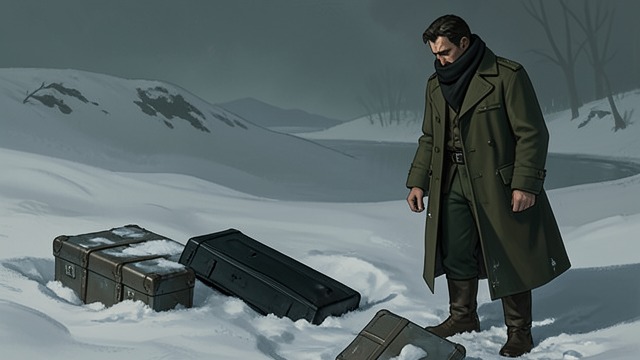
The Winter Crash
A flight with hidden purposes
A Junkers Ju 52, painted in Allied camouflage, sets out from Berlin carrying German negotiators, an American general, two crates of gold, and pilot William Miller. The pilot knows that the delegation is conducting secret talks but has not been told the mission’s full purpose.
The meeting runs late, and a severe storm closes in as the aircraft crosses toward Iceland. The pilot loses visibility over the glacier, strikes the ice, and crashes before reaching the planned rendezvous in Reykjavík.
A wreck buried from view
Some passengers die in the impact; others remain trapped in the fuselage as the snow and cold overwhelm them. One German, Count von Mantauffel, leaves on foot to seek help, carrying a locked metal case whose contents will remain unknown to those left behind.
The crash becomes both a physical disaster and the starting point of a long intelligence operation. The surviving witnesses, the bodies, the gold, and the case are all entombed in a landscape capable of hiding the evidence for decades.
The First Search
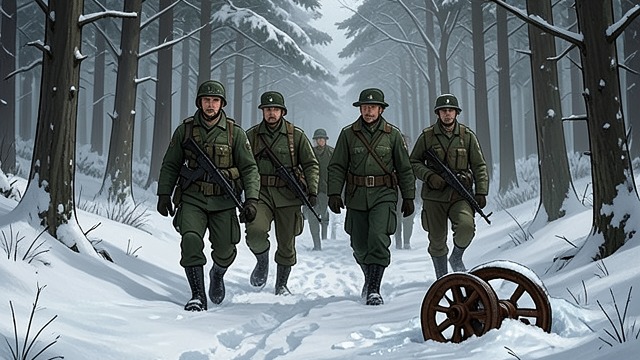
The First Search
A costly expedition
After two local farmers report a low-flying aircraft, U.S. forces mount a large search from the farm near Höfn. Colonel Miller leads soldiers across difficult winter roads and onto the glacier, relying on the brothers’ local knowledge to guide the party through dangerous terrain.
The search finds only the rim of a nose wheel, marked with the word “Kruppstahl.” Snow and the shifting ice have erased the crash site, while storms eventually force the expedition to abandon its work.
A promise of silence
Colonel Miller befriends the brothers and asks them to keep the real purpose of the searches secret. He returns over the years, trying to locate the plane and the brother he sent on the flight, but never finds either.
The farmers honor their promise, leaving the aircraft’s disappearance outside public history. The missing wheel becomes proof that the plane existed, while the glacier’s concealment turns the search into a legacy passed from one generation of military leaders to another.
The Satellite Detection
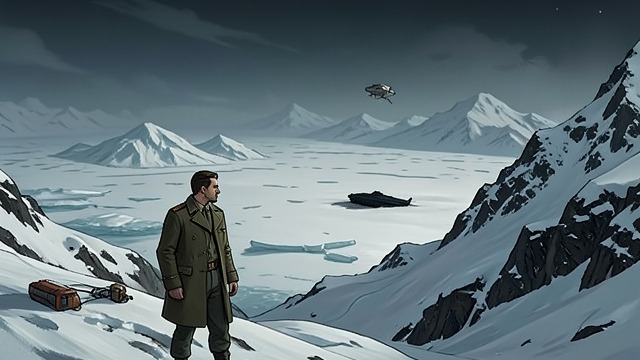
The Satellite Detection
A dark mark in the ice
Decades later, improved satellite imagery reveals a dark shape emerging from the southeastern section of Vatnajökull. General Vytautas Carr recognizes it as the aircraft the military has monitored for years and orders a covert recovery before the wreck can attract public attention.
Carr sends Ratoff to Iceland with special forces and heavy equipment. The operation is presented to local authorities as a routine or scientific exercise, while the actual objective and the reason for the secrecy are withheld.
Old knowledge, new urgency
The discovery activates a procedure that has been maintained within a small military circle since the war. Carr knows that the plane carries a secret capable of creating political consequences, but initially gives Ratoff only partial information.
The glacier has returned the evidence at a moment when satellite technology makes concealment harder. The mission’s urgency comes not only from the aircraft’s condition but from the possibility that Icelanders may see it, question the soldiers, or uncover what the military has spent decades suppressing.
The Wreck Is Opened
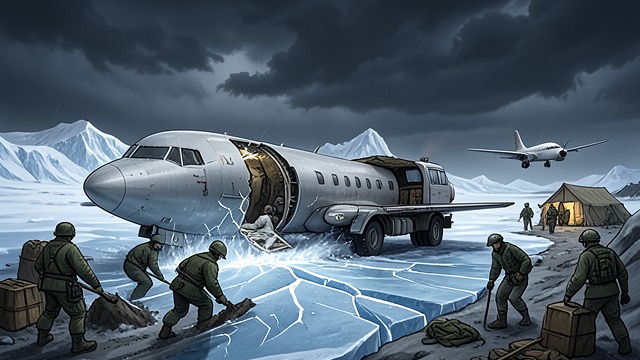
The Wreck Is Opened
A recovery under pressure
Ratoff’s troops dig the aircraft out of the ice, cut the fuselage into sections, and prepare the pieces for transport. A storm delays the work, while the nearby rescue team and the discovery of the plane increase the chance that the operation will be exposed.
Inside the wreck, Ratoff finds six bodies, including William Miller and an American general, as well as two small crates of gold. The modest quantity of gold does not explain the enormous surveillance effort or the extreme secrecy surrounding the aircraft.
Documents replace the expected treasure
The briefcase and other papers prove more consequential than the gold. Ratoff reads confidential material that reveals the plane’s connection to an unrealized plan for an Allied attack on the Soviet Union with German participation, and understands why Carr feared the documents becoming public.
Ratoff realizes that knowing the secret makes him expendable. He conceals the meaningful papers and tries to bargain for his life, turning the recovery mission into a struggle between the operation’s director and the institution that sent him.
The Airlift and Its Aftermath
The Airlift and Its Aftermath
Removal before exposure
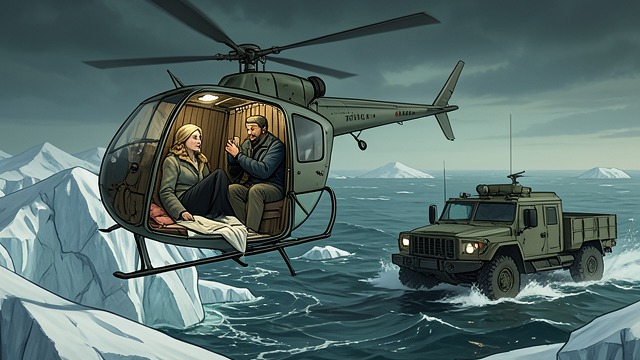
With Icelandic officials demanding answers and the rescue team moving toward the camp, U.S. forces hurry to airlift the aircraft sections from the glacier. The helicopters carry the wreck toward Keflavík, and the C-17 transport plane is prepared to take the cargo across the Atlantic.
Kristín escapes the camp by hiding in a body bag and wakes inside the aircraft during its flight. There she encounters Colonel Miller, who has come aboard hoping to find his brother, and begins to learn how the wartime mission connects to the operation now underway.
A secret survives its recovery
Carr ensures that Ratoff is punished and that incriminating documents are intercepted or destroyed. Kristín returns to Iceland with her memory disrupted, while official explanations contradict one another and deny the central facts of the operation.
The wreck is removed, but the truth is not resolved. Years later, Kristín finds a surviving fragment referring to Operation Napoleon and follows its geographical clue to Borne Island, where an inscription dated 1947 suggests that the operation’s human cargo may have left a trace beyond the glacier.
Late in World War II, during a winter storm
Days and weeks after the 1945 crash
Wednesday, 27 January, shortly before the main action
Saturday, 30 January, on the glacier
Late on 30 January and during 31 January
